
Running a Sex Offender Check in Gaines County
The Texas Public Sex Offender Registry is the main public source for a Gaines County check. The Texas Department of Public Safety, or DPS, combines registration data sent by local law enforcement authorities across the state. Searchers can use name, area, address, ZIP, county, map or proximity, and higher-education institution modes documented by DPS. A name search works best when the person is known. An area search is more useful for a home, route, or neighborhood question.
Start broad enough to catch aliases and spelling differences, but compare each possible match with the profile. Photo, age or date of birth, height, and other physical details help separate people with similar names. Read the offense, registration status, and verification data as separate fields. An address can change after a move or later check-in, and a public map pin reports the location held by the registry. It is not an invitation to approach a residence.
Who Registers Gaines County Offenders
Texas uses a local-to-state reporting chain. A person living inside Seminole generally registers with Seminole Police Department. A Seagraves address generally points to Seagraves Police Department. The Gaines County Sheriff handles an unincorporated address. Each local authority receives registration facts, verifies or records changes, keeps its local file, and transmits required data to DPS for the public statewide system.
Jurisdiction matters when a Gaines County listing seems stale or when possible noncompliance needs a report. For an unincorporated location, use the Gaines County Sheriff at 305 East Avenue A in Seminole or call 432-758-9871. Seminole Police can be reached at 432-758-4580, while Seagraves Police lists 806-387-2551. An immediate threat belongs with 911. A routine registry question should go to the local authority for the address, not to a different city office simply because it is closer.
The official DPS registration-program overview illustrates how local reporting feeds the statewide registry.
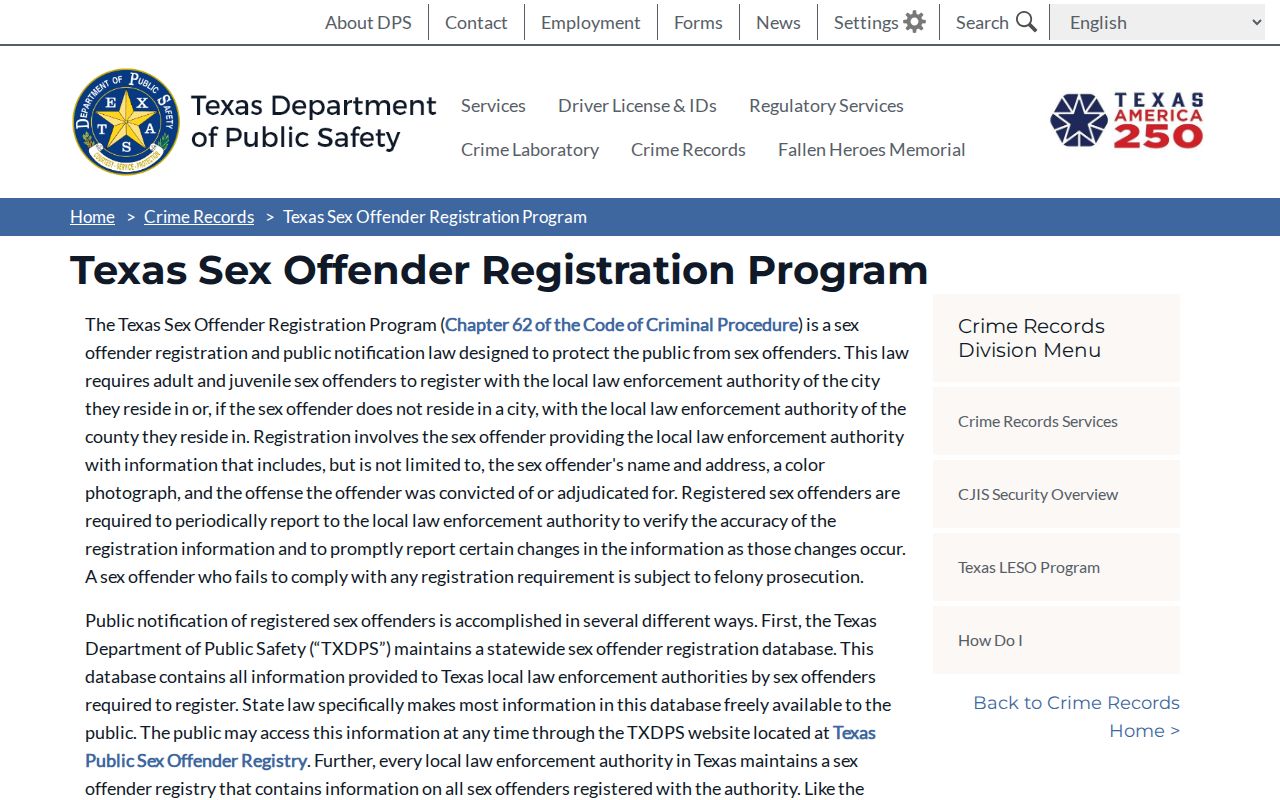
That state explanation helps distinguish the Gaines County registering authority from DPS, which publishes the combined public database.
Searching the Texas Public Sex Offender Registry
The public registry is free. DPS documented three main routes: known-person searches, location-based searches, and higher-education institution searches. During research, the live interface did not reliably expose its exact required-field markers or radius choices. The safest practice is to read the current form rather than assume which boxes are mandatory. Use this four-part method:
- Open the official Texas registry and choose the search mode that fits the question: name, area, or institution.
- Enter only facts that are known. For an area check, try the address, ZIP, county, map, or proximity option the live screen offers.
- Compare possible matches by photo, age or birth date, aliases, and physical description. Do not identify someone by name alone.
- Open the full profile and read the address, offense, registration duty, risk, verification, and compliance fields in context.
The official DPS registry search screen shows the current controls for a Gaines County sex offender check.
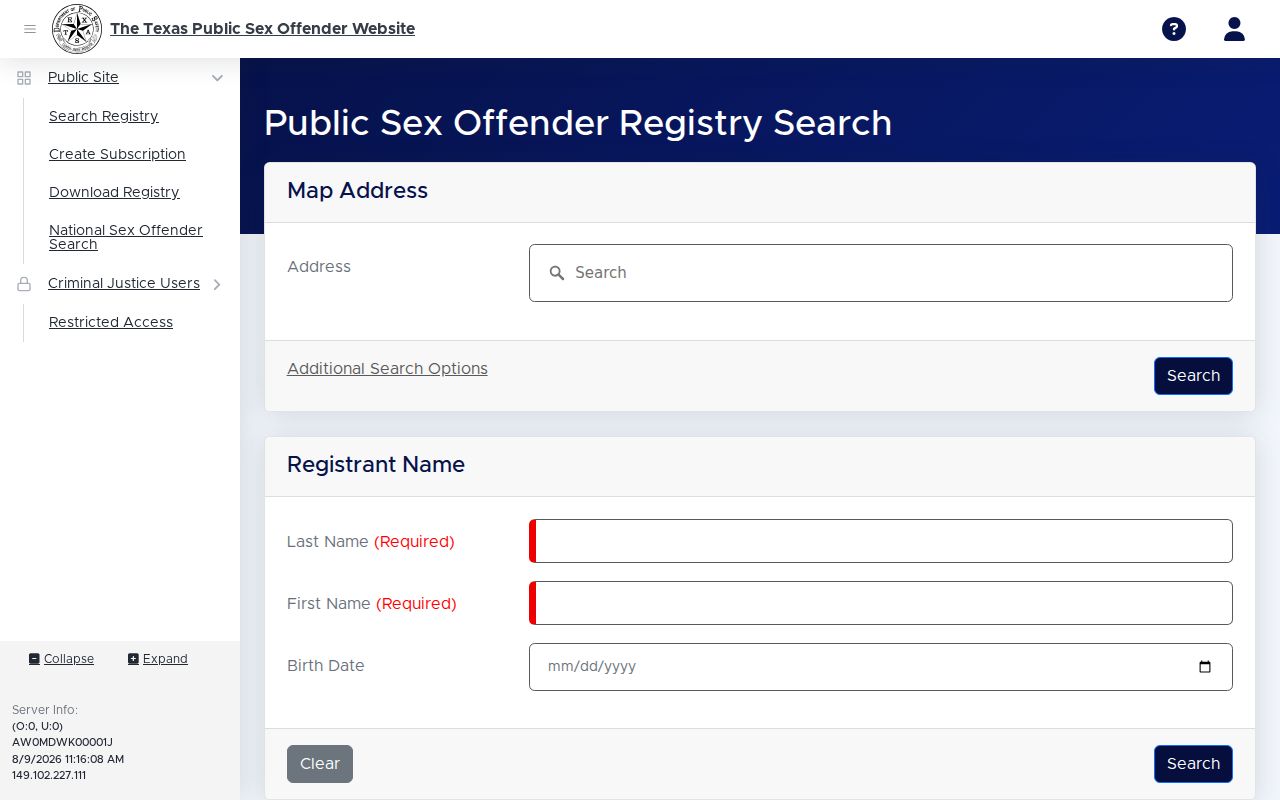
The live screen should control the search because DPS may change form labels, required markers, and map options.
| Search path | Documented input | Best use | Required status |
|---|---|---|---|
| Name | Name and identifying facts | Known person or alias | Confirm on live form |
| Area | Address, ZIP, county, map, or proximity | Gaines County location check | Confirm on live form |
| Institution | Higher-education institution | Campus affiliation search | Confirm on live form |
Gaines County Registry and NSOPW
The U.S. Department of Justice operates the National Sex Offender Public Website, or NSOPW. It sends a query across participating state, territorial, and tribal public registries. That makes it useful when a person may have moved across state lines, when the likely state is not known, or when a location near the Texas border creates a broader search need. NSOPW supplements the Texas source. It does not replace a direct DPS review when a Texas profile’s exact fields, address, or current status matter.
A sound cross-state check begins with NSOPW and then opens the source-jurisdiction record returned with a match. Return to the Texas registry for any Gaines County result. Compare both systems’ dates and identifiers, and ask the appropriate registering authority about a possible error. A no-match in one query is not proof that no public registration exists. Different spelling, aliases, relocation, the timing of a data transfer, or a search mode can affect results.
The official NSOPW search provides the federal cross-jurisdiction layer.
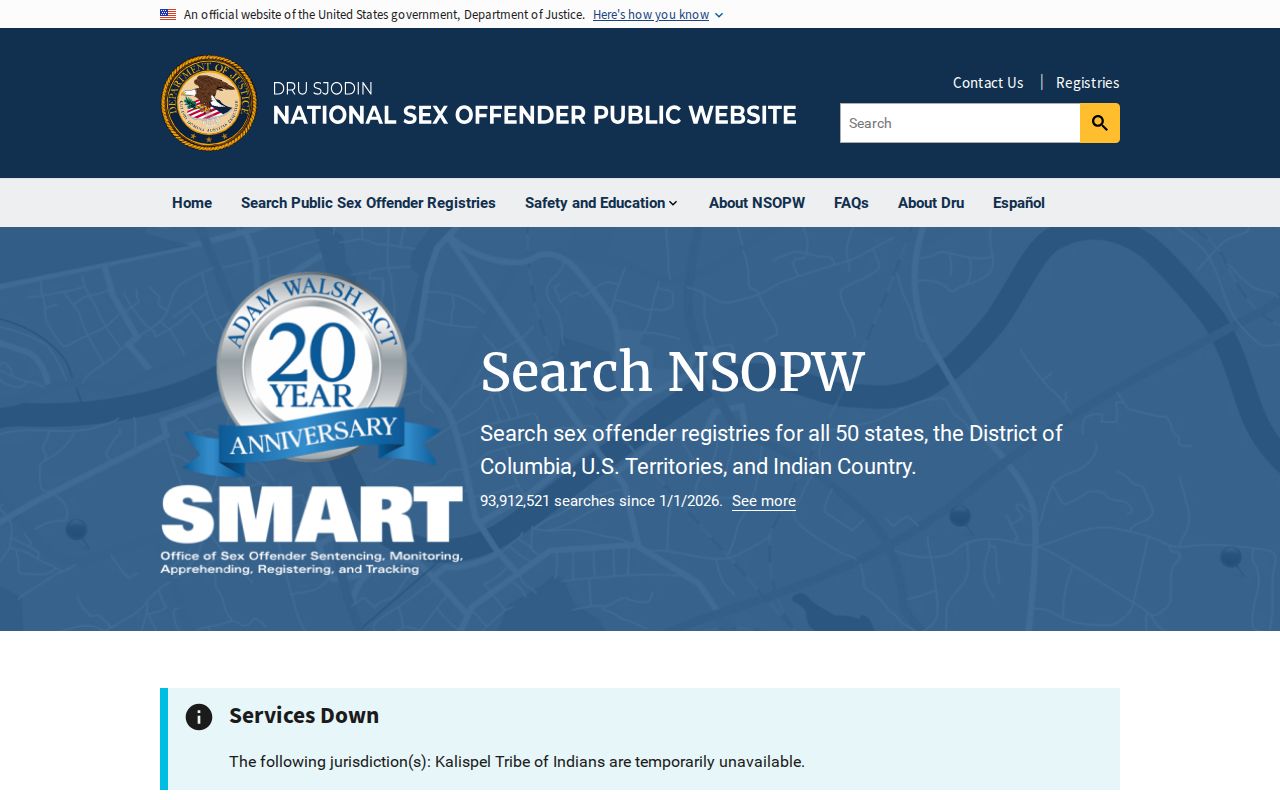
The national tool is most useful as a bridge back to the official registry maintained by the jurisdiction that supplied the record.
What a Registry Profile Shows
A Texas public profile presents enough facts to help identify a registrant and understand the legal registration record. It is not a full court file or a complete criminal-history report. Chapter 62 and the DPS registry FAQ support the fields below. Exact labels may vary with the live public display, and a blank public field can reflect confidentiality or lack of a qualifying value. It does not show that no agency ever collected the information.
| Identity | Full name, aliases, color photograph, date of birth, sex, and race. |
|---|---|
| Physical details | Height, weight, hair, eyes, and shoe size used to compare a possible match. |
| Residence | Published address or geographic location tied to the registration record. |
| Reportable offense | Offense, victim-age category, conviction date, punishment, and supervision information. |
| Other public facts | Risk, verification or compliance, institution, occupational-license indication, and some qualifying vehicle data when recorded. |
| Not public | Social Security and driver-license numbers, phone numbers, online identifiers, employer identifying data, victim identity, and DPS-only fields. |
The DPS registry FAQ explains the line between public and nonpublic profile data.
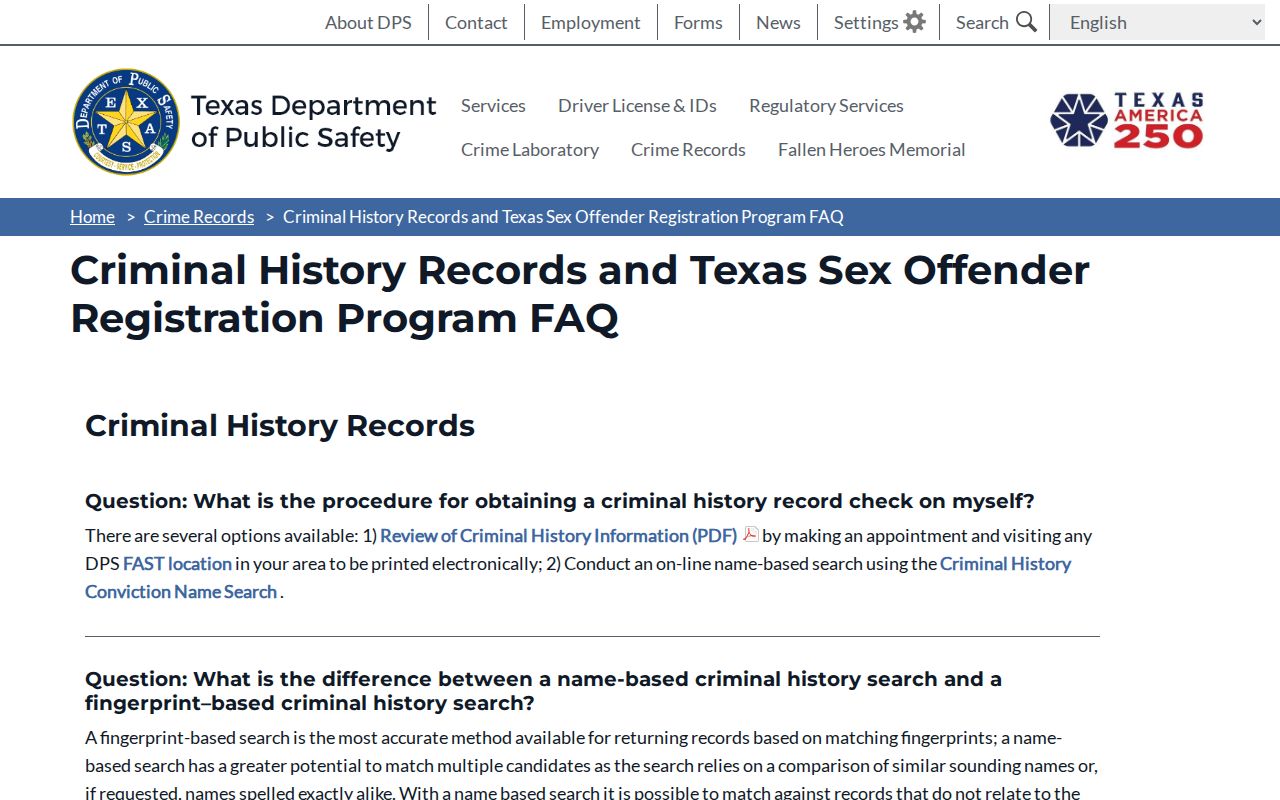
Those limits protect identifiers and victim information that are not part of a Gaines County public registry search.
Gaines County Registry Privacy Boundaries
Public access does not make every fact in a local registration file public. Texas withholds Social Security numbers, driver-license numbers, telephone numbers, online identifiers, employer-identifying details, extra information required only by DPS, and the victim’s identity. Juvenile information can also be ordered nonpublic. Searchers should not infer that an empty public box proves a reporting failure.
These limits also explain why a Gaines County sex offender registry profile cannot stand in for a case file. The profile focuses on the registration duty and the public facts authorized by law. A clerk’s judgment contains the court result. DPS criminal history is a separate contributed record system. Each product has its own scope, update path, and access limits. When the question concerns the conviction itself rather than present registration, the correct source is the court that entered the judgment.
Registration Requirements and Levels in Texas
Texas should not be reduced to a generic Tier I, II, and III chart. Registration duration follows the reportable offense and legal status. Low, moderate, and high risk labels answer a different question and chiefly affect community notification. A person can therefore have a risk assessment without that label serving as the legal clock for the duty. The broad duration paths below are based on Texas Code of Criminal Procedure Chapter 62.
| Obligation basis | General duration | How to read it |
|---|---|---|
| Enumerated or sexually violent categories | Life | The statute, offense, and status control. |
| Many other adult duties | Until the tenth anniversary after the latest relevant release, discharge, or dismissal | The start event must be identified. |
| Juvenile categories | Generally ten years after disposition or completion | A court can make some juvenile information nonpublic. |
| Extrajurisdictional registration | Until the source-law duty expires | The originating jurisdiction’s clock matters. |
High-risk or sexually violent predator arrival can trigger English and Spanish postcards. Routine online publication and targeted local notice are not the same process. A risk label should never be treated as a personal prediction of future conduct.
Gaines County Registry Verification Schedule
Verification frequency is individualized. Most people verify each year. A person with two or more sexually violent convictions or deferred adjudications verifies every 90 days. A civilly committed sexually violent predator who is outside a treatment facility verifies every 30 days. These intervals do not replace the separate duty to report qualifying changes, which generally must be made within seven days of the event.
Read a Gaines County profile’s last-verified or compliance entry with its date and status. A recent date confirms a recorded check-in, not the accuracy of every future fact. An older date may call for a report to the local authority, but it does not authorize a confrontation or a finding by a member of the public. The registering authority can review its local file and determine whether law enforcement follow-up is needed. Failure to comply with Chapter 62 is a felony under Article 62.102.
Note: Keep the profile URL and access date when reporting a possible Gaines County address or verification issue to the proper local authority.
Reporting Gaines County Registry Concerns
Choose the office by location. Contact Seminole Police for a Seminole address, Seagraves Police for a Seagraves address, and the Gaines County Sheriff for an unincorporated address. State clearly that the concern involves a public registry listing. Give the profile name, URL, published address, date viewed, and the specific mismatch or conduct observed. Avoid claims about guilt, danger, or intent that the record does not prove.
Preserve the source data and let law enforcement assess compliance. Do not visit the address, follow a person, post private facts, or recruit others to confront anyone. If the concern is only that an entry appears wrong, ask the registering authority or DPS how to submit a correction lead. If conduct creates an immediate risk of harm, call 911 instead of using a routine records line.
Lawful Use and Community Notification
The Texas registry supports community awareness and practical safety planning. It can help a family understand published locations, compare an identity, or track an official change. It does not turn a reader into an investigator. High-risk or sexually violent predator moves can bring targeted English and Spanish postcard notice, while the DPS website provides routine public access to eligible listings.
Texas Chapter 62 does not create a broad crime called registry misuse. Ordinary Texas laws still govern threats, harassment, stalking, trespass, and violence. Article 62.0061(d) is much narrower: it provides a $1,000 civil penalty for specified misuse by a commercial social networking site. That rule should not be recast as a general penalty for any reader or any unwanted use.
Use registry information lawfully: Never threaten, harass, stalk, trespass, confront, or commit violence. Chapter 62 has no general public-misuse crime, while ordinary law still applies and Article 62.0061(d) addresses a narrow commercial-social-network civil penalty.
Community notice is a prompt to use sound judgment. Verify the official profile, keep the date, and report a specific compliance concern to the responsible Gaines County police department or sheriff. Leave contact and enforcement to trained officials.