
How to Check Criminal History in Gaines County
Begin with the type and age of the event. The Gaines County Clerk’s LGS system is the online starting point for County Court criminal matters, chiefly Class A and Class B misdemeanors. Felony files belong to the District Clerk and 106th District Court. A recent arrest may not yet have a cause number, so call the jail first and then request the report from the arresting agency. Fine-only city citations remain with the Seminole or Seagraves municipal court. Texas DPS supplies a statewide public conviction and deferred-adjudication search, but that product is not a live county docket.
Use a full legal name, known aliases, and a birth date when the official form permits it. Similar names can produce false matches. A careful Gaines County criminal record search traces the same event through its stages instead of treating one screen as complete proof.
- Identify whether the target is an arrest report, booking, filed case, warrant, state criminal-history entry, or registry record.
- Search the correct clerk or state portal with a full name and the strongest available date or case identifier.
- Compare the court, agency, charge, and event date before deciding that a result concerns the right person.
- Contact the record custodian for restricted images, recent filings, certified copies, or a result that does not match.
- For your own identity-confirmed Texas history, use the official fingerprint review channel rather than a name-only result.
The Gaines County government gateway shows the county’s office structure.
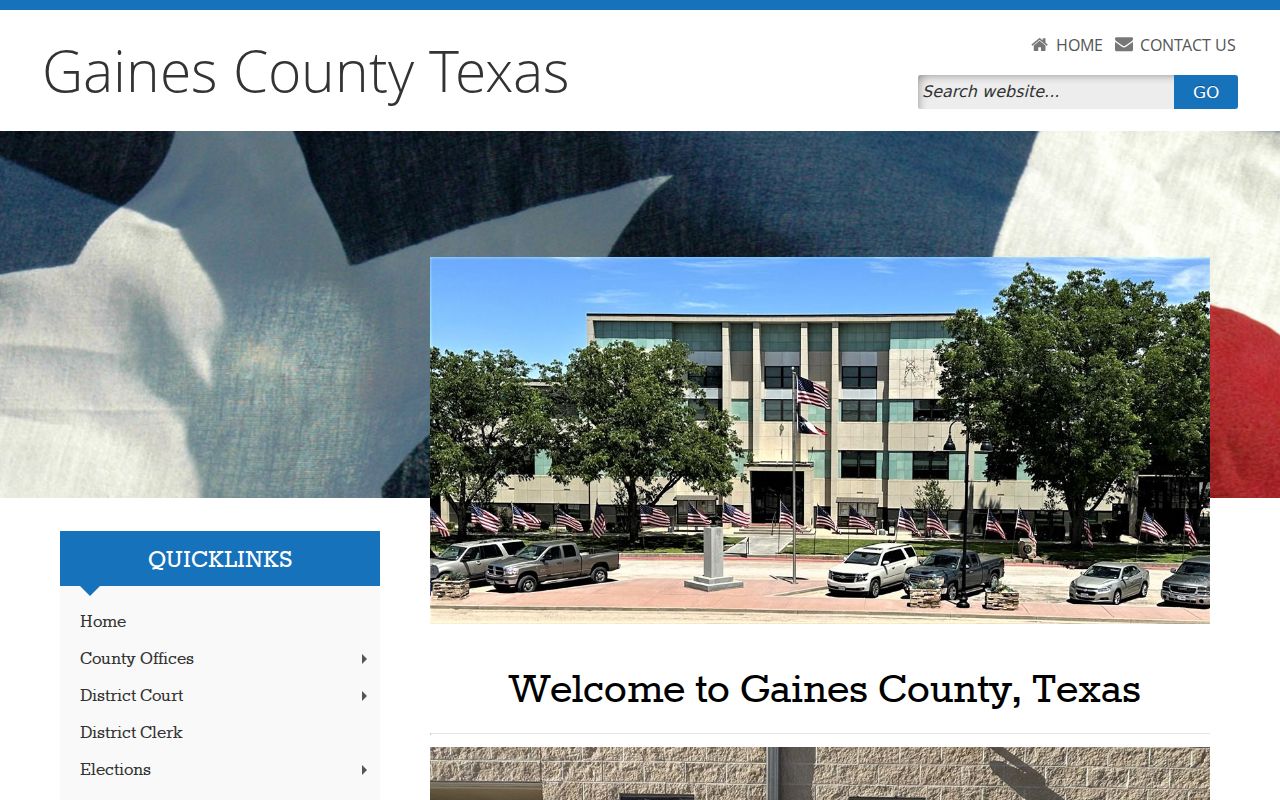
That division of offices explains why no single Gaines County screen can return every record type.
Gaines Records Span Two Buildings
Filed criminal cases and sheriff records live at separate Gaines County addresses. The courthouse at 101 South Main Street in Seminole houses the County Clerk in Room 206 and the District Clerk in Room 311. The clerk counters are open Monday through Friday from 8 a.m. to 5 p.m. County Court files cover Class A and B misdemeanors. District Court files cover felonies. The Law Enforcement Center at 305 East Avenue A holds sheriff incident, booking, custody, release, and warrant-routing records. Its administrative counter uses weekday hours, while dispatch answers the custody line at all hours.
Gaines County Courthouse
101 South Main Street
Seminole, TX 79360
County Clerk: 432-758-4003
District Clerk: 432-758-4013
Law Enforcement Center
305 East Avenue A
Seminole, TX 79360
432-758-9871
Dispatch available 24 hours
Ask the creator of the document. The sheriff cannot certify a court judgment, and the clerk does not hold the investigating officer’s report.
Official Texas Background Checks
The Texas Department of Public Safety Crime Records Division maintains the Computerized Criminal History system. Its public Criminal History Conviction Name Search returns the Texas convictions and deferred adjudications that law permits DPS to release. An online query costs one search credit. It is name based, not fingerprint confirmed, and it does not replace a Gaines County case file. A no-match message can reflect the public scope, spelling, identifiers, timing, or reporting rather than prove a statewide absence of records.
The form uses full first and last names, with an optional middle or maiden name and complete or partial birth date. Results rank possible matches. One paid query opens the matching public rap sheets produced by that search, so compare identity and event fields with care.
| Field | Required | Use |
|---|---|---|
| Last name | Yes | Enter the full name, not a partial form |
| First name | Yes | Use the full given name |
| Middle or maiden name | No | Helps narrow close matches |
| Birth date | No | Complete or partial date components may narrow results |
The DPS name-search interface shows the official entry point.
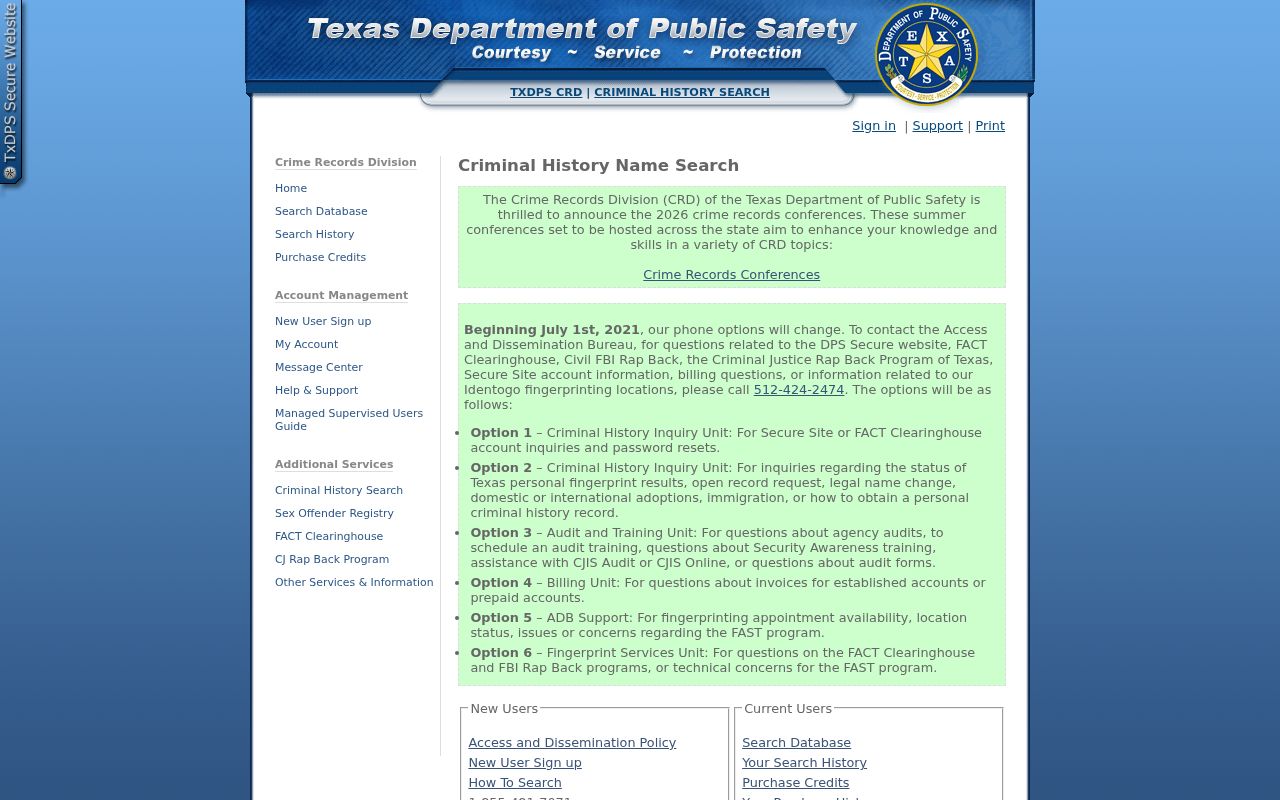
The portal’s ranked possibilities are search aids, not fingerprint identity findings.
Gaines Background Check Fees
Official products answer different questions and carry different charges. The public DPS online search costs $1 per search credit. A mailed CR-42 public-data search costs $10. Card-funded credits add a 2.25 percent processing amount per credit and a $0.25 transaction charge, while check purchases avoid that card fee. A personal fingerprint review uses the DPS check and the FAST collection service. The DPS Crime Records FAQ explains the official fingerprint fees and review route. No Gaines County enrollment site was verified.
| Official service | Researched amount |
|---|---|
| DPS online public name search | $1 per search credit |
| CR-42 mailed public search | $10 |
| DPS personal record check | $15 |
| FAST fingerprint collection | $10 |
| Hard-card-only service | $20 for two cards |
For an identity-confirmed review of your own Texas record, schedule through the official FAST and IdentoGO enrollment service.
The live locator should be used because the research did not confirm a permanent enrollment location inside Gaines County.
Types of Criminal Records
A criminal event creates several records, each with a separate purpose. An investigating agency keeps the incident or arrest report. The jail creates booking, bond, custody, and release entries. Prosecutors decide what charge to file, and the appropriate clerk opens the court case. DPS receives fingerprint, prosecution, and disposition reports through the state system. A warrant belongs to its issuing court and law-enforcement databases, while supervision and registry records follow their own rules.
- Arrest and booking: the agency report describes the event; the jail record tracks intake and custody.
- Court case: the clerk file shows the filed charge, settings, plea, outcome, sentence, and costs.
- State CCH: DPS compiles contributed arrest cycles, prosecutor actions, and court outcomes.
- Warrant or capias: the court issues the process, while officers confirm whether it remains active.
- Custody and supervision: Gaines Sheriff, TDCJ, probation, and parole each hold a different status slice.
Texas calls probation “community supervision.” Public judgments and revocation filings may appear in the clerk file, but supervision officers’ case notes are not a public people-search system.
Gaines Criminal Records by Court
Charge level determines which Gaines County court holds the filed record. The 106th District Court and District Clerk handle felony cases. Gaines County Court and the County Clerk handle Class A and Class B misdemeanors. Justice courts and the Seminole or Seagraves municipal court hear fine-only matters within their jurisdiction. The Texas Penal Code punishment chapter defines those classes, but the prosecutor’s filed charge, not the booking label alone, determines the trial-court route.
| Court channel | Record scope | Contact |
|---|---|---|
| 106th District Court | Felony case files | District Clerk, 432-758-4013 |
| Gaines County Court | Class A and B misdemeanors | County Clerk, 432-758-4003 |
| Justice courts | Fine-only cases and magistration records | JP1: 432-758-4015; JP2: 806-546-2666 |
| Municipal courts | City Class C and ordinance cases | Seminole: 432-758-8800; Seagraves: 806-387-3437 |
After filing, the clerk can confirm the cause number, docket setting, plea, disposition, judgment, and available copies. A complete Gaines County criminal court search follows the file through the clerk rather than stopping at the booking charge.
Gaines County Jail Record Fallback
Gaines County publishes no official searchable jail roster, booking portal, daily arrest blotter, mugshot gallery, or sheriff app. Use the verified fallback chain. Call the sheriff’s 24-hour number for current custody, use VINELink for custody notifications, submit a focused Texas Public Information Act request for releasable booking material, and move to the TDCJ locator only after a transfer to state custody. TDCJ can return a state prisoner’s location, offenses, and projected release information. It does not locate a person still held for a Gaines County pretrial matter.
When calling, provide a full name and birth date if known. Ask for the booking number and date, arresting agency, listed charge, bond, current location, release status, and any filed cause number. The absence of an online roster does not justify using a mugshot aggregator.
Custody flow: Arresting agency → Gaines County booking and bond → clerk case after filing → TDCJ only if a state sentence and transfer follow.
Note: VINELink supports status notification, but it is not the sheriff’s full booking record or a statewide criminal-history report.
What a Gaines County Criminal Record Shows
The fields depend on the custodian. A DPS history groups identity-linked arrest cycles, prosecutor actions, court dispositions, and sentence information. A clerk case file can add a charging instrument, hearings, motions, orders, judgment, costs, warrants, and available document images. Booking files can contain intake and release facts that never become part of the public DPS product. Read the source label before drawing conclusions.
| Name and identifiers | Names, aliases, date of birth, sex, race, SID, and fingerprint-linked numbers where law allows. |
|---|---|
| Arrest and booking data | Event date, agency, tracking or booking number, arrest charge, bond, custody, and release information. |
| Charges and statutes | Booking allegations, prosecutor action, filed offense, degree, and cited Texas law. |
| Disposition | Dismissal, acquittal, conviction, deferred adjudication, no-bill, or another court outcome. |
| Sentence | Jail or prison term, fine, costs, and community-supervision terms shown in the public source. |
| Custody or supervision | Current jail, prison, probation, or parole status only when that system publishes it. |
- Cause number
- The court’s identifier for a filed case.
- Magistration
- The first rights, probable-cause, and bond appearance after arrest.
- Disposition
- The result of a charge, such as dismissal, acquittal, or conviction.
- Capias
- Court process that directs an officer to take a person into custody.
- Deferred adjudication
- A Texas outcome in which the court withholds a final guilt finding during supervision.
Gaines Criminal Record Reporting Gaps
Booking, filing, and final judgment occur at different times. A recent Gaines County arrest can appear at the jail before the prosecutor files a charge. The prosecutor may choose a charge that differs from the one listed at booking. Later, a local judgment must be matched to the correct DPS arrest cycle. That sequence explains why a court result and a public state history may disagree for a time.
DPS’s 2024 completeness figures reported 115 charges, 94 prosecution actions, and 65 court actions from Gaines County contributors. Those counts measure record submission and matching. They are not crime totals, arrest totals, or rates. The gap is a reason to compare the arresting agency, clerk file, and DPS result. If your own history lacks a disposition, obtain the certified outcome from the clerk and follow DPS correction instructions. The general error line is 512-424-7256, and fingerprint review may be needed to settle identity.
Public Access Laws
Texas law makes many government records available, but it does not make every part of a criminal file public. The Texas Public Information Act governs executive-branch records held by agencies such as a police department or sheriff. Judicial case records go to the clerk under court access rules. Active-investigation material, protected identifiers, victim or minor information, medical details, and some witness facts may be withheld or redacted. Basic information about an arrest and crime remains distinct under the law-enforcement exception.
Key Texas laws:
Government Code Chapter 552 provides the public-record request framework and exceptions.
Government Code Chapter 411 controls public criminal-history dissemination and nondisclosure.
Code of Criminal Procedure Chapter 66 sets criminal-history contribution duties.
Code of Criminal Procedure Chapter 55A governs expunction.
Code of Criminal Procedure Chapter 62 governs sex-offender registration and public access.
The county’s official public-information notice supplies the local request route. State the incident number if known, date and time range, location, agency, exact record type, and whether inspection or copies are wanted. An estimate above $40 triggers an itemized estimate. The tenth-business-day rules often concern notice or an attorney general ruling, not a promise that every record will arrive within ten days.
Gaines County Record Access Context
U.S. Census QuickFacts estimates 23,956 Gaines County residents in 2025 across 1,502.36 square miles of land. The county reports 14.4 people per square mile, and 58.8 percent of residents age five or older speak a language other than English at home. Those figures do not describe crime. They do explain why clear phone routes, plain language, and remote record options matter when a counter may be far from a rural address.
Gaines County Warrant Checks
No official public Gaines County warrant database, county list, mobile app, or general statewide Texas warrant portal was found. Confirm a possible warrant with both the issuing court and law enforcement because recall and service updates can lag. The sheriff routes law-enforcement confirmation at 432-758-9871. District Clerk, County Clerk, the two justice courts, and the two municipal courts each confirm process tied to their cases.
Ask for the warrant or capias number, cause or citation number, issuing court and date, charge, bond, and whether the record is active, recalled, or served. A probable-cause arrest warrant differs from a bench warrant, a post-judgment capias pro fine, or a search warrant. To resolve your own matter, call the clerk about the accepted appearance, bond, or payment route, then obtain confirmation that recall occurred. Do not assume an online citation payment clears an active warrant.
Note: A historical public-record request is not a safe substitute for direct court and sheriff confirmation when current warrant status matters.
Sealed, Expunged & Restricted
Texas uses expunction for destruction or return of records covered by a court order. Chapter 55A paths can include acquittal, pardon or actual innocence, a qualifying dismissal or no-bill, mistaken identity, and certain statutory programs. Common early filing periods include 180 days after a Class C arrest, one year after Class A or B, and three years after a felony, but the facts, limitations period, and prosecutor action still control eligibility. Time alone does not qualify a record.
An order of nondisclosure works differently. It limits ordinary public release of qualifying history while preserving access for criminal-justice bodies and other agencies named by law. Serious or violent offenses, registrable offenses, family-violence matters, and stalking can block general routes. Juvenile records also follow separate access limits. The filing belongs in the Gaines County court connected to the arrest or case, and current fees must be confirmed with the clerk.
Gaines Expunction Service Routes
Gaines County’s District Clerk publishes a local service-address sheet for expunction cases. It identifies the District Clerk, Sheriff, DPS, FBI, County Clerk, justice courts, adult and juvenile probation, Seminole and Seagraves police, and local prosecutors. That list is valuable because an order can only reach the custodians identified and served through the court process. It does not decide whether a person qualifies.
The Texas Office of Court Administration nondisclosure forms provide the statewide filing materials for qualifying routes.
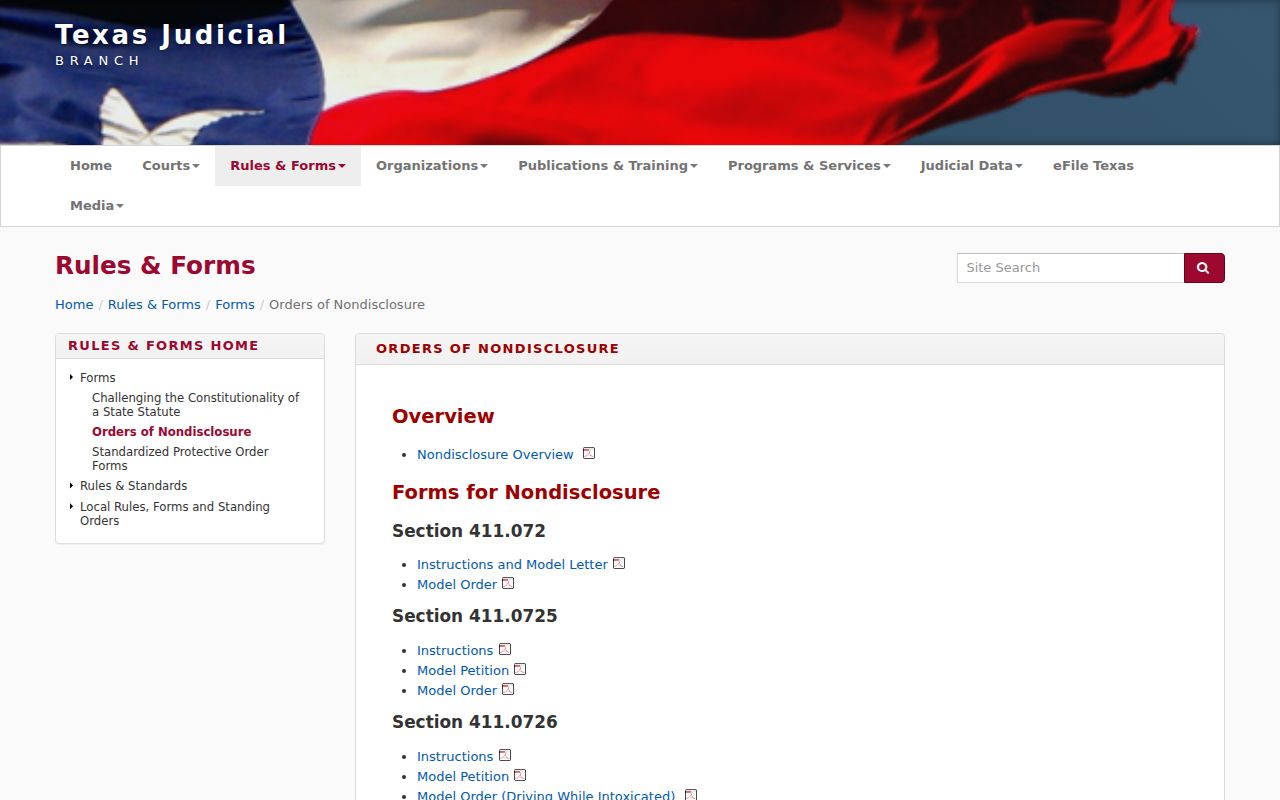
After an order, verify the clerk’s distribution and review your fingerprint-linked record rather than assuming every system changed at once.
Criminal Records by City in Gaines County
Gaines County identifies two incorporated communities. City police create their own reports, and municipal courts hold fine-only citations and ordinance cases. Higher-level charges move to the county or district court, while the sheriff may hold booking and custody data. Seminole offers a detailed city public-information form and a municipal citation search. Seagraves relies more heavily on phone, counter, and court contact, with an online system meant for payments rather than general case research.
Seminole Criminal History
7,730 estimated residents in 2025. Use the city form for police records and the municipal portal for fine-only cases.
Seagraves Criminal History
2,417 residents in the 2020 Census. Police and municipal court access begin with direct local contact.